ELECTRICAL Cables and Switchgears
electrical systems continue to advance toward higher efficiency and safety, with cables and switchgears serving as the fundamental components for power distribution and protection.
Electrical Cables: Types and Uses
Electrical cables are assemblies of one or more insulated conductors protected by an outer sheath.
• Power Cables: Transmit electrical energy from source to load.
o Low-Tension (LT): Rated up to 1.1kV; used for residential and light commercial distribution. Common types include NM-B (Romex) for dry indoor areas and UF (Underground Feeder) for direct burial.
o High-Tension (HT): Rated 11kV and above; used for long-distance transmission from plants to substations.
o Armoured Cables (BX/MC): Encased in metal for physical protection in high-risk or industrial areas.
• Flexible Cables: Designed for frequent movement, used in portable tools, appliances, and robotics.
• Communication & Data Cables:
o Coaxial: Used for high-frequency signal distribution in TV and internet.
o Ethernet (Cat5e/Cat6/Cat8): Standard for local area networks (LANs); Cat8 supports higher speeds for data centers.
o Fiber Optic: Uses light pulses for ultra-fast, long-distance data transfer immune to electromagnetic interference.
Switchgears: Types and Uses
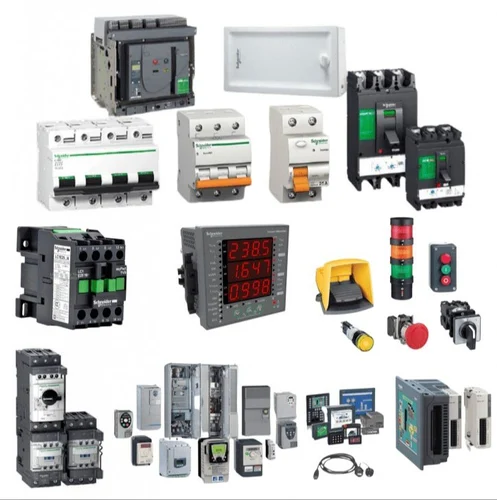
Switchgear refers to the collection of switches, fuses, and circuit breakers used to control, protect, and isolate electrical equipment.
• Low-Voltage (LV) Switchgear: (Up to 1kV) Found in homes and offices.
o MCB (Miniature Circuit Breaker): Protects small circuits from overloads and short circuits.
o RCCB/ELCB: Critical for life safety, detecting earth leakage to prevent shocks.
o MCCB (Molded Case Circuit Breaker): Used for higher currents (up to 2500A) in commercial/industrial panels.
• Medium-Voltage (MV) Switchgear: (1kV to 36kV) Used in distribution substations and large factories.
• High-Voltage (HV) Switchgear: (Above 36kV) Essential for utility grids and power plants.
CONTACT FOR SERVICE